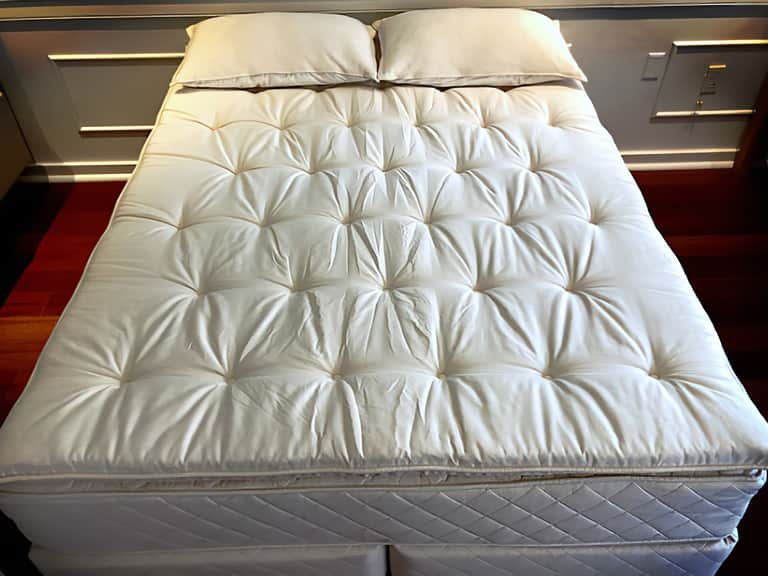
Natural latex mattresses
How to Evaluate a Natural Latex Mattress: Materials, Certifications, and Construction
A mattress can be called natural, organic, or luxurious without those words telling you much about what is inside. To compare latex mattresses with confidence, look past the label: identify the latex type, examine every layer, check what a certification actually covers, and match the construction to the way you sleep.
Begin with the materials list
“Natural latex mattress” sounds like a straightforward description. In practice, it can refer to a mattress made primarily with latex derived from rubber-tree sap, a latex layer combined with other materials, or a product whose marketing emphasizes natural ingredients while leaving important details unstated. The name is a starting point, not a specification.
Ask what the mattress is made of from top to bottom. A useful description identifies the material in each comfort and support layer, the cover fabric, and any quilting, adhesives, fire barriers, or other components. It should also distinguish latex from the surrounding materials. A latex core inside a cotton-and-wool cover is not the same construction as a latex layer paired with foam, springs, or synthetic fabric.
Specificity matters because a mattress is a system. The cover affects the first touch and may add a quilted cushion. The upper layer influences how readily the surface gives way under shoulders and hips. Deeper layers usually contribute more to the bed’s overall support and stability. Even when two mattresses use the same latex, differences in thickness, firmness, layering, and cover can make them feel quite different.
Look for names and quantities, not simply adjectives. “Organic latex,” “natural comfort,” and “eco-friendly materials” are broad phrases. More useful information tells you whether the latex is Dunlop or Talalay, whether it is certified, how thick each layer is, and what materials make up the cover. If the company does not disclose key components, treat that as missing information rather than filling in the gaps with assumptions.
Dunlop and Talalay: two processes, not a simple ranking
Dunlop and Talalay are two common processes used to make latex foam. Both begin with latex and create a resilient material, but differences in manufacture can contribute to differences in feel and structure. Neither process, by itself, proves that a mattress is organic, more durable, healthier, or better suited to every sleeper.
In broad terms, Dunlop latex is produced by pouring latex into a mold and curing it. The resulting foam is often described as having a denser, more grounded feel. Talalay manufacturing includes additional steps, such as expanding the latex in a mold and freezing it before curing. Talalay is often described as lighter or more buoyant. These are general impressions, not guarantees: formulations, firmness, layer thickness, and mattress design all affect the experience.
For a shopper, the practical question is not which process wins in the abstract. It is how the complete mattress feels under your body. A firm Dunlop support core may be paired with a softer upper layer. A different model may use one latex piece throughout. The construction can matter more than the process label when you are comparing pressure relief, ease of movement, or the feeling of being held on the surface.
Ask whether the stated latex type applies to every latex layer or just one part of the mattress. A product may use one process in its support core and another in a comfort layer, or combine latex with wool or cotton. A clear layer-by-layer account makes those distinctions visible and helps prevent the phrase “latex mattress” from obscuring a mixed-material design.
It is also worth separating “natural latex” from “100% natural latex.” The first phrase may describe a material made predominantly from natural latex while still allowing other ingredients; the second is a stronger claim that should be supported by a clear specification. Even then, ask what the statement refers to: the latex foam alone, all latex layers, or the entire finished mattress.
Read the construction like a map
Mattress descriptions often list a total height and a firmness rating. Those details help, but neither tells the full story. Construction is the map that shows how the mattress is intended to work. A layered design may combine a supportive base with softer comfort layers; a simpler build may rely on one main slab of latex. Both can be thoughtfully made, but they may respond differently to pressure and movement.
For each layer, note its material, thickness, and stated firmness. Then look at the order in which the layers are arranged. A plush topper placed above a firm core creates a different surface sensation from a uniformly firm mattress. A removable topper may offer a way to change the feel, but confirm whether it can be replaced or adjusted and whether that affects the warranty.
Consider the cover, too. Cotton and wool are common components in natural-material mattresses. Cotton provides the outer textile; wool may be used as batting or as part of a quilted layer. These materials can change the initial feel and the mattress’s overall profile. Ask whether the cover is removable, whether it can be washed, and what care instructions apply. A zippered cover is not necessarily washable, and a mattress care label may specify spot cleaning only.
Construction affects more than comfort. A mattress’s total height must work with the bed frame, fitted sheets, and any existing foundation. A very deep model may require sheets with deeper pockets. Some latex mattresses are heavy, which can make turning, moving, or setting them up more demanding. If a model has a particular foundation requirement, follow it: adequate support and ventilation are part of the intended setup.
One example of a described multi-layer build is the Naturally Organic Hudson Luxe Latex Mattress. Its product details identify a firm Dunlop latex core, a medium Dunlop layer, and a separate topper made with organic wool and Dunlop latex, enclosed in an organic cotton cover. That kind of layer-by-layer description can help illustrate how a mattress combines materials and feel; it should not replace checking the current specification, available options, or fit for your own needs.
Understand what certifications verify
Third-party certifications can make material claims easier to assess, but they do not all certify the same thing. One standard may focus on the latex or organic content, while another may assess chemical emissions, textile processing, or a broader supply chain. A logo alone is not enough. Find the certification name, identify the certified material or facility, and check whether the finished mattress is included in the claim.
For latex, GOLS—the Global Organic Latex Standard—is commonly referenced in discussions of certified organic latex. Its scope relates to the organic status and processing of latex products within its standard. When a mattress description says “GOLS-certified,” ask whether the claim applies to the latex used in the mattress and whether the maker identifies the certified supplier or product. Certification does not automatically mean every component of the whole mattress is organic.
GOTS, the Global Organic Textile Standard, is associated with organic textile processing and products. A mattress may use GOTS-certified cotton or wool in its cover or quilting. That does not, on its own, certify the latex inside. Read the claim in context: a certified cover is meaningful information about that textile, but it is not a blanket certification of every layer and component.
Other standards may address different questions, including restricted substances or emissions. Their value depends on the standard’s scope and the exact item or component certified. “Tested,” “compliant,” and “certified” are not interchangeable. If a company makes a specific claim, look for a certificate number, a current certification document, or a way to verify the product with the issuing organization.
Certifications are evidence, not a substitute for disclosure. They do not tell you whether a mattress feels comfortable, whether its firmness suits your body, how durable it will be in your home, or how responsive the seller will be if a problem arises. Nor should an organic certification be treated as proof that a mattress can prevent illness or improve sleep for everyone. Keep the claim within the limits of what the standard actually verifies.
Match firmness and feel to your body
Firmness is personal, and a label such as “medium” is not a universal measurement. The same mattress can feel different depending on body weight, shape, sleep position, and the structure of its layers. A side sleeper may prefer more give around the shoulders and hips; a back sleeper may look for a balance between cushioning and support. These are useful starting points, not rules that predict comfort with certainty.
Support and firmness are related but not identical. Firmness describes the surface impression; support concerns how the mattress holds the body in a comfortable position. A soft surface can still have a supportive base, and a firm surface may not feel supportive to every person. Pay attention to whether the product describes separate comfort and support layers, rather than relying on one rating to explain the whole design.
Latex is often valued for its responsive feel. Compared with materials that allow a slower, deeper sink, latex commonly springs back more quickly as pressure changes. Some sleepers appreciate that buoyancy because it can make turning feel easier. Others prefer a more enveloping surface. The word “latex” does not settle the question: the thickness and firmness of each layer, plus any wool or textile quilting, influence how pronounced the response feels.
If possible, test the mattress in the position you normally sleep in and give yourself time to notice pressure at the shoulders, hips, and lower back. When an in-person trial is not available, review the return policy, trial period, exchange fees, and conditions before purchasing. A long warranty is not the same as a comfort trial; the two address different concerns.
A practical checklist for comparing options
When product pages use different language, put the details side by side. A simple comparison can reveal which claims are documented and which remain vague. Keep your priorities focused: a mattress that matches your comfort needs and has transparent materials may be a better choice for you than one with an impressive list of features you do not value.
- Latex type: Is it Dunlop, Talalay, or a combination? Does the description specify which layers use each type?
- Material origin and content: Does the maker explain whether the latex is natural, blended, or certified organic, and what the cover and quilting contain?
- Layer details: Are thickness, placement, and firmness described for each layer?
- Certification scope: Which organization issued the certification, what material or facility does it cover, and can the claim be verified?
- Cover and care: Is the cover removable? What can be cleaned at home, and what should remain spot-clean only?
- Fit and setup: Does the mattress height suit your frame and sheets? Are there foundation, ventilation, or weight considerations?
- Comfort and policies: Is the firmness appropriate to your preferences? What are the trial, return, exchange, and warranty terms?
It can help to write down unanswered questions and ask the maker or retailer for direct responses. A transparent seller should be able to distinguish the mattress’s materials from its certifications, explain its layer arrangement, and provide care and warranty information. If the answer repeats a slogan without resolving the question, the uncertainty remains.
Care, durability, and the life of the mattress
Natural materials still need routine care. Follow the manufacturer’s instructions for the specific model, since latex, wool, cotton, and finished covers may have different needs. Avoid assuming that sunlight, heat, or water is appropriate for every component. Some latex products, for example, should be kept away from direct heat or sunlight; a cover may be spot-clean only even if it has a zipper.
A suitable foundation can help provide stable support, while a protector can reduce exposure to spills, body oils, and everyday soil. Use products that fit the mattress and do not compromise the feel you want. If the maker recommends ventilation or a particular base, treat that guidance as part of the care plan rather than an optional detail.
Durability cannot be inferred from a natural-material claim alone. Construction, material quality, use, care, and the conditions of the warranty all matter. Read the warranty for its duration, coverage, exclusions, and process for making a claim. Normal softening or impressions may be treated differently from a manufacturing defect, and a warranty’s existence does not guarantee that every change in feel will qualify.
For a long-term purchase, consider what happens at the end of the mattress’s useful life. Ask whether layers or toppers can be replaced, whether the product can be disassembled, and what local disposal or recycling options exist. The answers may be less tidy than the label, but they offer a more complete picture of the product’s material journey.
Common claims, carefully read
“Natural means chemical-free.” Natural describes an origin or material category; it does not mean that no processing or additional ingredients were used. Ask for a full materials list and the relevant certification or test details.
“Organic certification covers the whole mattress.” Not necessarily. A certification may apply to latex, cotton, wool, a textile-processing chain, or a particular facility. Confirm the scope rather than assuming that one certified component makes every part certified.
“Dunlop is always firmer than Talalay.” That is an oversimplification. Manufacturing process can influence the feel, but firmness, formulation, layer thickness, and the rest of the mattress design matter as well.
“More layers mean better construction.” Not by themselves. Layering can be used to tune a mattress, but a simpler design may also meet a sleeper’s needs. Evaluate what each layer contributes and whether the complete build is clearly explained.
“A high price proves higher quality.” Price may reflect materials, manufacturing, shipping, retail costs, or other factors. It is not a substitute for a verifiable specification, a suitable feel, or clear policies.
The clearest decision is the informed one
Evaluating a natural latex mattress is less about finding a perfect adjective than assembling a reliable picture. Identify the latex type and source. Understand how the layers are arranged. Check the cover, quilting, and care instructions. Then examine certifications by scope, and compare the comfort and support characteristics with your own preferences.
That approach turns a crowded category into a set of answerable questions. Dunlop and Talalay become processes to understand rather than teams to choose between. Certification logos become claims to verify rather than shorthand for quality. Construction becomes a practical description of how materials work together.
A well-documented mattress does not promise a universally perfect night. It gives you something more useful: enough information to judge whether its materials, feel, and design align with what matters to you. In a purchase meant to support years of sleep, clarity is not a finishing touch. It is part of the construction.